International Society for the Protection of Mustangs and Burros joins forces with Princeton University to Study Equine Behaviors

 Celebrating more than 50 years of wild horse and burro education and conservation, ISPMB continues its vision and mission as an international leader.  Joining with Princeton University's Dan Rubenstein, PhD, Department of Ecology and Evolutionary Biology, the research will begin this June to identify the "functional" social behaviors in wild horse society.


ISPMB manages a conservation center in South Dakota where 4 distinct wild horse herds live undisturbed. "One of the main reasons we have kept the groups isolated is so we can study various herd cultures," says ISPMB President Karen Sussman. "Even though the herds have been living in the same habitat for 12 years, the groups have maintained their individual cultures, so we are eager to understand as much as possible about the social behavior of wild horses and how they may affect management."


Dr. Rubenstein is well known for his global work on behavior and decision making in wild equids, particularly with zebra sociality. Investigating how animals "network" and what determines "leaders" in animal society will translate well into the ISPMB studies.


Joined by Dr. Cassandra Nunez, PhD, currently a research scholar at Virginia Tech and past wild equid researcher at Princeton, Dr. Nunez has been involved in previous wild and feral horse studies in the US.


Princeton student, Lydia Anderson will be in the field for about 10 weeks this summer working on her senior thesis and identifying critical factors in wild horse networks. "I am so incredibly excited to be able to live in the field and study wild horses", comment Lydia. " I grew up in a small town in Wisconsin, loving nature, so this will be a wonderful opportunity to experience both horses and nature."


ISPMB Research Director, Mary Ann Simonds, MA Whole Horse and Equestrian Science Institute has been studying social behaviors, leadership and cognition in wild horses since her undergraduate work the early 1970s at the University of Wyoming. "I am thrilled to have such a great team of folks dedicated to assisting with this project. Being able to identify sustainable behaviors and how leadership takes place in functional herds will help us identify why the herds have maintained their various cultures and hopefully give insight into management strategies."

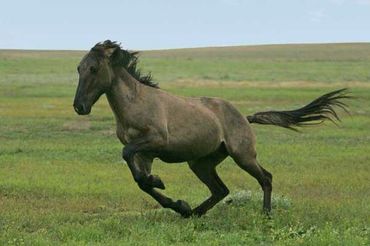
Princess and Ellie

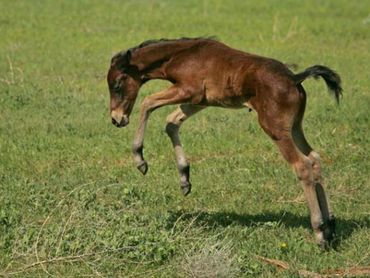
Miss Little Ears

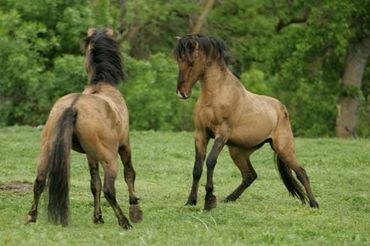
Gila Family


Weldon Lee and Lori Huff would like to invite you to join them for our Wild Horses of the West photo adventure on South Dakota's Cheyenne River Sioux Reservation at ISPMB.   

It will begin Sunday, June 9, as we gather for dinner around 5 PM. Afterwards, we'll all get together for a classroom session.


Although, this is a photography workshop with great photo opportunities and teaching sessions, it's more than that . . . it's a gathering of friends by invitation.

Space is limited to 10 people. Since 7 people are already signed up, the sooner you contact us the better. The follow link will take you to Weldon Lee's website where you can see details and more images from previous workshops HERE.

Follow Us:

ISPMB

PO Box 55
Lantry, SD 57636-0055
Phone: 605-964-6866
Mobile: 605-430-2088
ispmb@lakotanetwork.com


For years the BLM has been rounding up herds using helicopters and an irresponsible method of gathering the herd which disrupts herd structures.

ISPMB has 12 years of study on herd structures which ultimately could help the BLM make better decisions as to how roundups should occur.

We need to keep the herds together for further study.

36,000 Wild Horses Threatened by latest action of Congress

Find out more here

A MUST READ!
Order Wild Horse Annie and the Last of the Mustangs today!

All proceeds benefit ISPMB, Velma's original organization!.

“This important addition to the history of mustangs and animal protection laws is highly recommended for animal lovers and Western history buffs.” - Library Journal, starred review

ORDER YOUR COPY HERE

In 1950, Velma Johnston was a thirty-eight-year-old secretary enroute to work near Reno, Nevada, when she came upon a truck of battered wild horses that had been rounded up and were to be slaughtered for pet food. Shocked and angered by this gruesome discovery, she vowed to find a way to stop the cruel round-ups, a resolution that led to a life-long battle that would pit her against ranchers and powerful politicians—but eventually win her support and admiration around the world. This is the first biography to tell her courageous true story..

THE HORSES NEED YOUR HELP!

ISPMB has been documenting wild horse behaviors on our wild herds now for eleven years. We have enough documentation to show that BLM's constant removals of wild horses have contributed the destruction the herds' social structures creating an increase in wild horse numbers due to the deterioration of their education system.

Simply put - when wild horses are rounded up and then returned to the wild (selective removals) - leaving the gates open and horses to fend for themselves as they return to their habitat areas (contracepted or not)- the younger stallions will take the opportunity to steal mares away from the older stallions that truly contain the herd wisdom. Over time, mentoring of the bands by younger stallions has led to breeding younger and younger fillies.

This behavior could lead to the loss of survival of wild herds over the long term!

We know that our studies will lead to the end of helicopter gathers by the BLM. That BLM will only be able to remove horses through bait or water trapping leaving band structures intact.

WE NEED YOUR HELP!


Wild horses and burros would not exist in our country today if it were not for the efforts of ISPMB and our first president, Wild Horse Annie, who were instrumental in getting Congress to pass federal legislation in 1971 that gave protection from death and harassment of wild horses and burros on public land. (PL 92-195) Read more about Annie here

Our goal at ISPMB is to prevent the elimination of unique herds and to find a solution that would help to raise the public’s awareness of the need to protect wild horses and burros on public lands. At present, ISPMB is creating a model management program for wild horses in our country and currently manages three unique wild horse herds – the White Sands herd, the Gila herd, and the Catnip herd.

Currently, ISPMB is continuing its observation and study of the herds so that a model management program can be derived. Fertility and recruitment rates are observed along with behaviors of bands and their interaction with each other. Each herd is blood typed and DNA tested. Wild horse herds are far more genetically diverse compared to any breed of domestic horse in our country. (Dr. Gus Cothran-Equine Geneticist)

ISPMB would like to share with you the extraordinary behaviors we observe in our wild horse herds.  This information is intended to show the true spirit and magnificence of these wild animals which are fast disappearing from our American landscapes.  Your donations will help our work.

AMAZING WILD HORSE BEHAVIOR

We are so thrilled to report that we have found a supply of hay. As difficult to nearly impossible as it was to find hay, we have a fantastic opportunity to lock in a reasonable price.

With 61% of our country suffering from the worse drought since the '30's and no hay to be found in South Dakota or our surrounding states, we just must save these very rare herds that keep on giving and giving. The data that we have documented about their behaviors and social structures are arming us with solid information that is leading to the preservation of wild horses on public lands.

We are hopeful the BLM is taking our information to heart as they made the first step toward that end by beginning to bait and water trap wild horses preventing the dissolution of their family harems through helicopter roundups. We can imagine that Wild Horse Annie, our first President, is looking down upon us with satisfaction in her soul as she sees one more protection afforded these magnificent wild horses - our National Heritage Species. Horse families are so bonded that separating them in helicopter roundups is unconscionable.

Being the ONLY organization in the United States that manages entire herds of wild horses, our work must go on!

Here is how you can help "your" horses.

One bale weighing 1000# feeds one horse for one month - $100
Six bales of hay will feed one horse through the worst of winter - $600
Our goal is to purchase 2,500 bales before winter and before hay quadruples in price
and it will!

Please consider a gift of life for these extraordinary horses. One behalf of these regal animals, I thank you.

Karen Sussman
President, ISPMB      

We can put any size donation to work!

Thank you for your generosity!


Help Feed A Horse - Buy A Photograph

From the camera of the famous wildlife photographer - Weldon Lee.

Several photographs to choose from!

Click HERE to see the complete selection of these breathtaking photographs.

Sign up for our Email Newsletter

Win a trip to our Ranch!

Enjoy a weekend with the Mustangs in beautiful South Dakota.

Find out More Here

Website design donated by Jennifer Althoff
Copyright © 2011 ISPMB. All rights reserved